Dev log #1 · Milestone · · 1 min read
World generation, modular mountains, and the HUD foundation
Six months of foundational work: deterministic hex world generation, seasonal migration, population lifecycle, modular mountain ridges, campaign setup, and the first complete HUD.
Between March and mid-September 2026, we built the core simulation and presentation stack from a blank Unity 6 ECS project into a playable seasonal survival loop.
Deterministic Steppe Generation and Seasonal Loop
The foundation rests on an authoring-independent deterministic world generator paired with an ECS hex pathfinding assembly. Every seed produces valleys, river corridors, shelter ridges, and grazing lands that cycle through spring, summer, autumn, and winter.
Rather than anchoring the player to a static city, the core loop revolves around scouting, settling an Ovoo, reading seasonal forecasts, and packing camp before frost or depleted grass traps the tribe.
Population Lifecycle and Decision Modals
During July and August we replaced placeholder numbers with an authoritative population ledger—tracking available workers, annual natural growth, joining households, and collapse attrition when food or warmth runs dry.
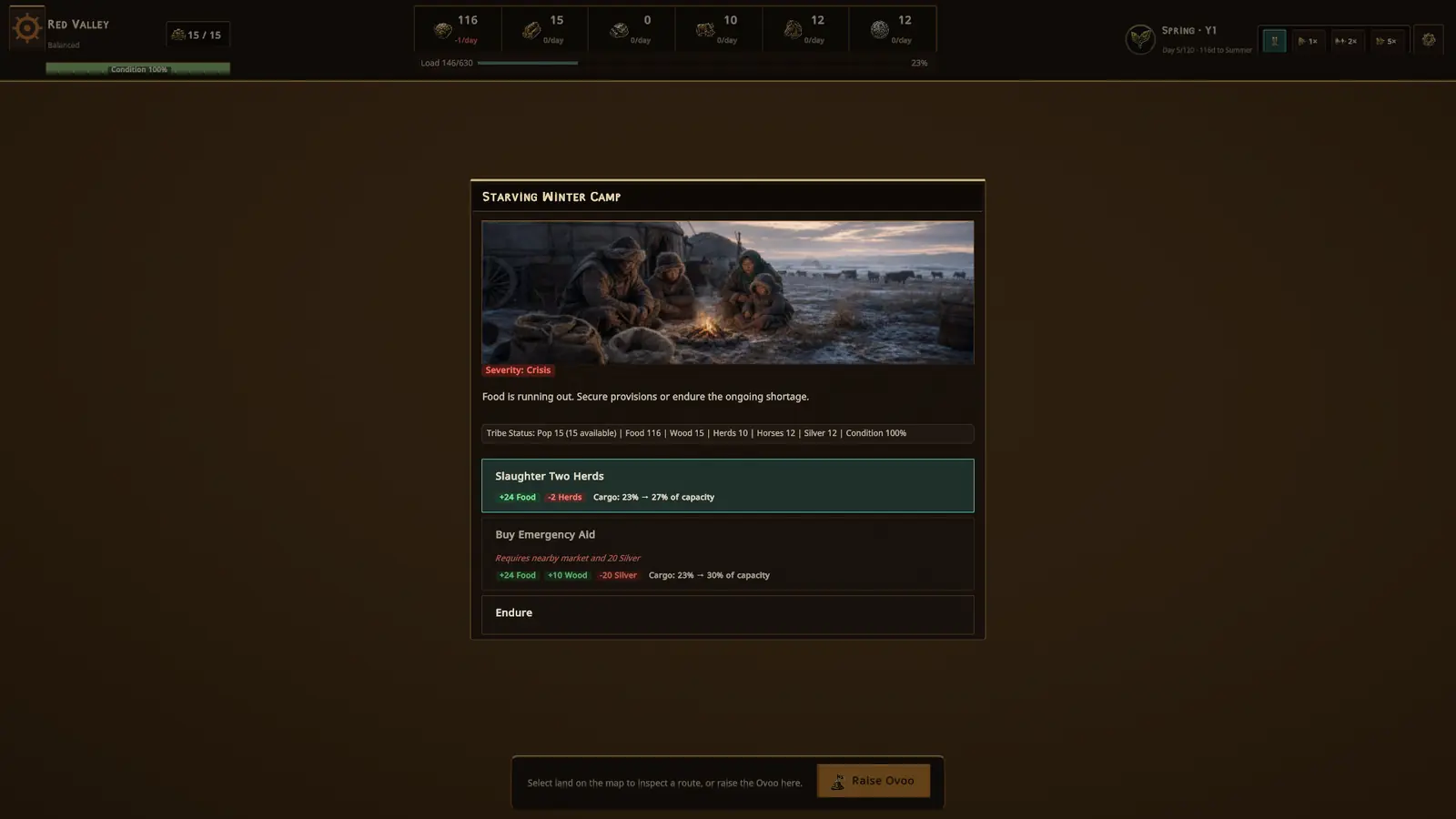
Crisis dilemmas and seasonal shifts now pass through a unified modal service that displays exact resource and cargo consequences before you commit.
Modular Mountain Ridges and Campaign Setup
In September we replaced individual cone peaks with a 14-module neighbour-aware mountain pack so mountain belts merge into continuous ridges and passes across the hex grid.
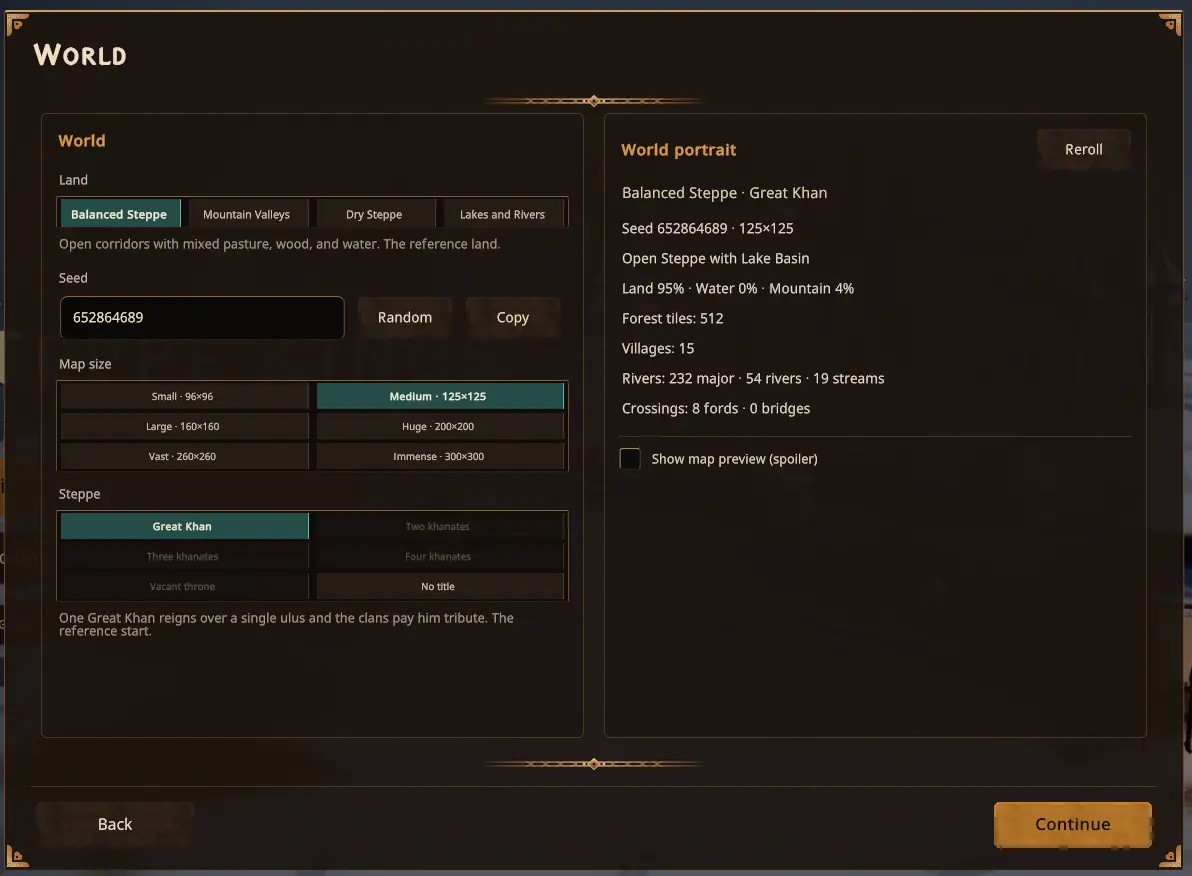
We also built the Campaign Setup flow before world generation—letting players choose map profile, dimensions, seed, starting tribe preset, and name before stepping onto the grass—alongside the first layered seasonal music runtime and responsive Command Inspector Deck HUD.